
Knowledge sharing
Disputes in payments are a complex landscape.
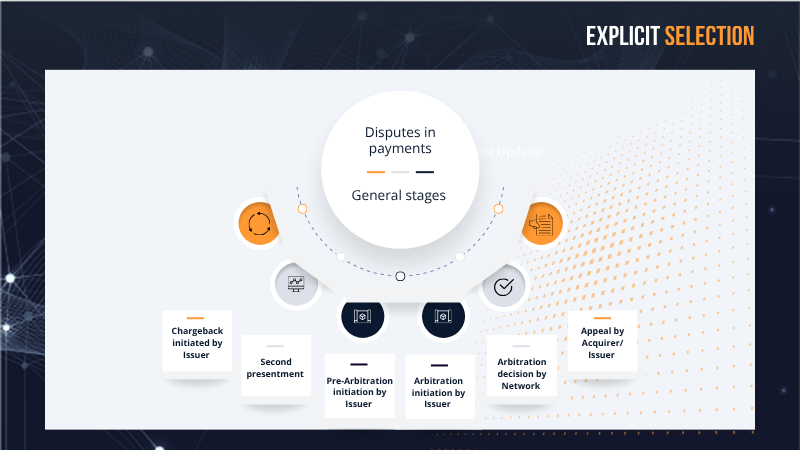
Disputes in payments are a complex landscape managed by a lot of guidelines, policies and processes. Rules controlling disputes can be divided into several types.
➡️ 𝐔𝐧𝐢𝐯𝐞𝐫𝐬𝐚𝐥 𝐫𝐮𝐥𝐞𝐬 apply to all dispute reason codes, for example the requirement that issuers and acquirers submit clearly legible documentation.
➡️ 𝐂𝐚𝐭𝐞𝐠𝐨𝐫𝐲-𝐬𝐩𝐞𝐜𝐢𝐟𝐢𝐜 𝐫𝐮𝐥𝐞𝐬 apply to specific categories of disputes, e.g. cardholder disputes may require issuer to obtain direct statements from the cardholder.
➡️ 𝐒𝐭𝐚𝐠𝐞-𝐬𝐩𝐞𝐜𝐢𝐟𝐢𝐜 𝐫𝐮𝐥𝐞𝐬 apply to specific stages of a dispute (e.g. all pre-arbitration stages).
➡️ 𝐒𝐩𝐞𝐜𝐢𝐟𝐢𝐜-𝐫𝐞𝐚𝐬𝐨𝐧 𝐜𝐨𝐝𝐞 𝐫𝐮𝐥𝐞𝐬 apply to specific reason codes, e.g. chargeback because a refund was not processed requires certain documentation unique to this reason code.
While different payment networks handle disputes uniquely, the core dispute categories are generally named quite similarly. However, the terminology for the general dispute stages and the rules around escalation can vary.
General chargeback escalation stages:
1. Chargeback initiated by Issuer
2. Second presentment
3. Pre-arbitration initiated by Issuer
4. Arbitration initiation by Issuer
5. Arbitration decision by Network 6. Appeal by Acquirer/Issuer
The differences are as follows (when we look at Visa and Mastercard):
Stage 2 ▶️ ‘Second presentment’. This is called “Acquire/Merchant response” in Visa, and “second presentment” in Mastercard.
Stage 3 ▶️ ‘Pre-arbitration initiated by Issuer’. In visa, ‘pre-arbitration and arbitration’ can be initiated by either the Issuer or Acquirer. However, the rights depend on the dispute type; for ‘Fraud and Authorization’ disputes, the rights to ‘pre-arbitration and arbitration’ initiation belong to the Acquirer. For ‘Cardholder and Processing Error’ disputes, ‘Pre-arbitration and Arbitration’ can be initiated by the Issuer.
The process may end earlier if either of the two parties accepts financial responsibility and stops escalating. Visa specifies no automatic rules like this, but Mastercard does. If the Issuer doesn't escalate to pre-arbitration within the allowed timeframe, they automatically accept financial responsibility. After pre-arbitration, if the Acquirer does not respond, they automatically accept financial responsibility.