
Knowledge sharing
Looking at payment network products and capabilities: Card-on-File.
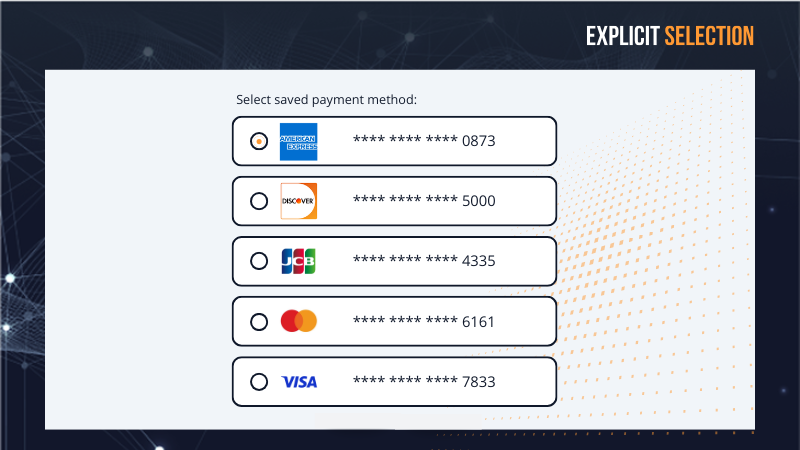
With CoF, future transactions can be processed without you having to re-enter your card details.
With Card-on_file. (CoF), your payment credentials (such as PAN or token) are stored with your consent by a merchant (or its agent), so that future transactions can be processed without you having to re-enter your card details.
Benefits/functionality
➡️ Enables frictionless checkout
➡️ Supports merchant-initiated transactions (MIT) under prior consent
➡️ Enhances customer experience and retention
➡️ Improves authorization rates and reduces declines when correctly flagged, since networks can apply specific rules for stored credentials
➡️ Enables better lifecycle management of credentials (e.g., updating expired PANs, tokens) for smoother reuse
Implementations
Consent and disclosure: The merchant must obtain Cardholder consent and disclose how those credentials will be used, the truncated card digits, expiry of consent, etc.
Initial transaction (CIT) vs subsequent use: The first transaction where credentials are stored is typically a Cardholder-Initiated Transaction (CIT). Subsequent uses (where the merchant uses the stored credential) are Merchant-Initiated Transactions (MIT).
Flagging/data fields: Networks require specific indicators in transaction data so that issuers understand the risk and context.
Tokenization and vaults: Typically, the stored credentials are not raw PANs in merchant systems, but tokens stored by tokenization providers.
Credential lifecycle and updates: Merchant or network must support updating credentials to keep the stored payment method valid.
Compliance with stored credentials frameworks: Networks have mandated frameworks specifying how CoF transactions must be handled.
How major networks handle it
➡️ American Express supports storing credentials and merchant-initiated use; while publicly less granular than Visa/Mastercard, the same “stored credentials” concepts apply.
➡️ Discover supports stored credentials; merchants must comply with stored-credential rules for recurring/unscheduled transactions.
➡️ JCB provides support for card-on-file/credential-on-file transactions in its merchant guidelines (especially in Asia-Pacific).
➡️ Mastercard supports Card-on-File transactions under its established CIT/MIT data framework, requiring clear linkage between the initial consent and subsequent use.
➡️ Visa applies standardized data elements and indicators to identify Card-on-File transactions and ensure correct linkage to the original consented credential.
Card-on-File is a critical capability in modern commerce for delivering smooth customer experiences However, because storing and re-using payment credentials introduces additional issuer risk, networks have put in place frameworks that require clearly flagged transactions, cardholder consent, and proper data handling.